Two years after making first all-AI film I got an opportunity to do it again, this time when Rich Silverstein was asked to give a presentation at IDEA SF in June 2026.
Rich's brief to me was more or less: "I want you to use all the AI tools you can think of to show the innovations and innovators to come out of San Francisco. Make me an AI soup!"
We decided to play a little loose with the rules that usually apply to our commercial work, as you can see (AND HEAR) in the film.
By far the most satisfying aspect of the process was writing the script. My process was using conversations with Gemini's LIVE mode to first narrate the story I wanted to tell and then use the same conversational mode to structure and refine the script, act by act.
I also had a lot of success defining a visual style guide and using that to keep my keyframes consistent throughout thanks to OpenAI's new(-ish) GPT Image 2 model.
The keyframes were all animated with Google's VEO 3.1 model. I audited a number of different video models, including some of the Chinese models I don't usually work with, but VEO 3.1 delivered better and more consistent results throughout. Google released the Omni model as I was working on the film, and I tried to integrate it into my workflow, but I found the quality of the output to not be nearly as good as VEO.
My total time spent on this film was around 30 hours. This was a weekend and after-hours project, and I also owe a lot of thanks to our excellent video editor who really made the video sing.
In July 2026 it was shown at the SF MOMA as part of the inaugural Future of Us Festival.
Rich's brief to me was more or less: "I want you to use all the AI tools you can think of to show the innovations and innovators to come out of San Francisco. Make me an AI soup!"
We decided to play a little loose with the rules that usually apply to our commercial work, as you can see (AND HEAR) in the film.
By far the most satisfying aspect of the process was writing the script. My process was using conversations with Gemini's LIVE mode to first narrate the story I wanted to tell and then use the same conversational mode to structure and refine the script, act by act.
I also had a lot of success defining a visual style guide and using that to keep my keyframes consistent throughout thanks to OpenAI's new(-ish) GPT Image 2 model.
The keyframes were all animated with Google's VEO 3.1 model. I audited a number of different video models, including some of the Chinese models I don't usually work with, but VEO 3.1 delivered better and more consistent results throughout. Google released the Omni model as I was working on the film, and I tried to integrate it into my workflow, but I found the quality of the output to not be nearly as good as VEO.
My total time spent on this film was around 30 hours. This was a weekend and after-hours project, and I also owe a lot of thanks to our excellent video editor who really made the video sing.
In July 2026 it was shown at the SF MOMA as part of the inaugural Future of Us Festival.
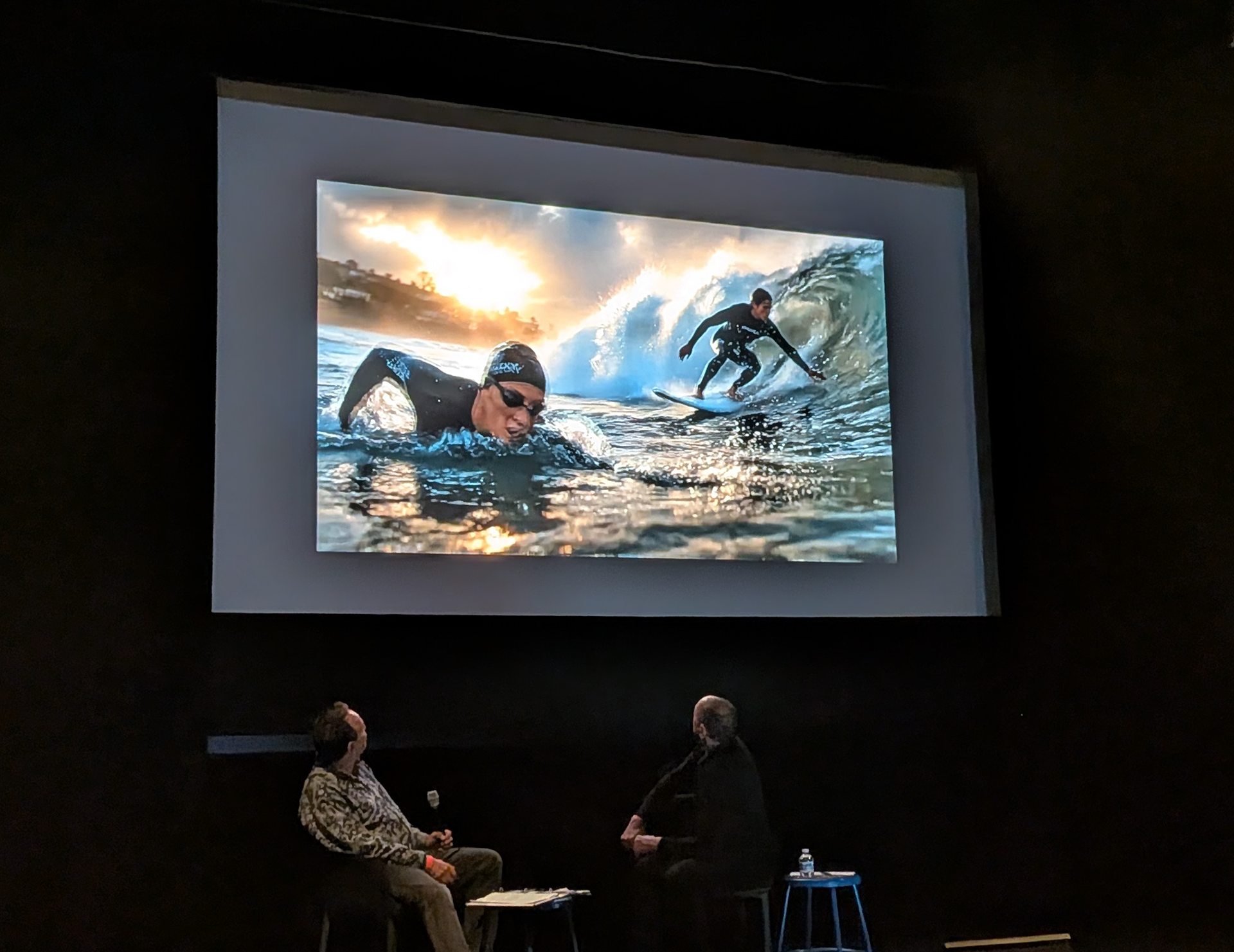
ALWAYS DAWN screened on stage by Rich Silverstein at the SF MOMA in July 2026